


On April 10, 2026, the global audience stood still as the Orion spacecraft made its triumphant splashdown in the Pacific Ocean.
While the four-person crew of the Artemis II mission celebrated their safe return, the digital world was already buzzing with a different kind of success story.
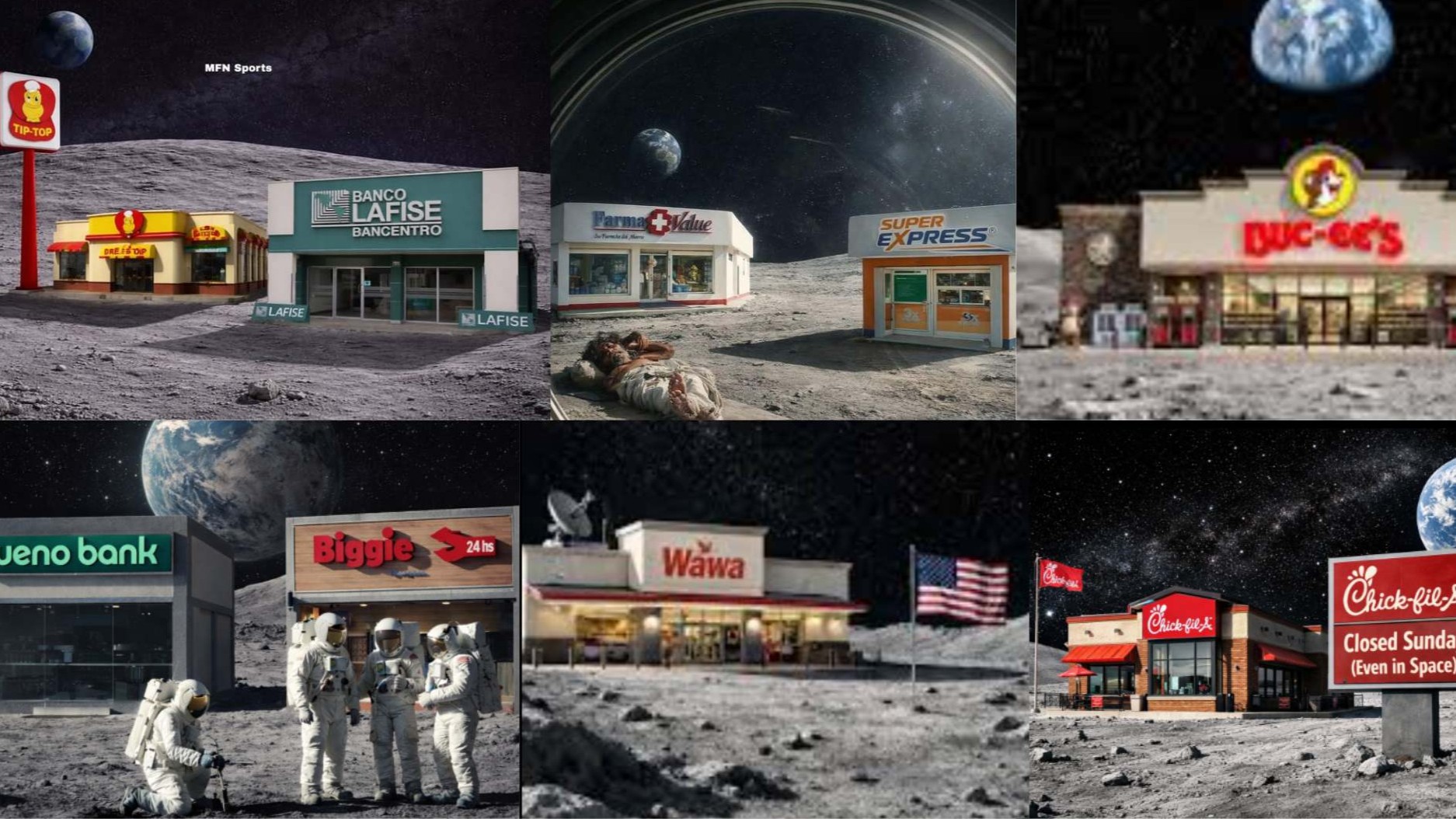
This mission was not just a historic achievement for space exploration; it was the birth of the Artemis II Marketing Trend, a cultural phenomenon that saw international brands “confirming” their presence on the lunar surface.
This trend was defined by a collective sense of wonder and a playful exploration of “what if” scenarios. Brands from all sectors recognized that the lunar landscape was a blank canvas for storytelling.
By situating their storefronts, products, and services among the craters, they tapped into a universal human desire for progress and connection.
Consequently, this movement became a blueprint for how businesses can use global events to drive organic engagement, humanize their corporate identities, and build lasting trust with their communities.
The genius of this marketing trend lay in the “confirmation” of presence. Instead of simply congratulating NASA, brands took it a step further by photoshopping their familiar buildings and products into the high-resolution lunar images captured by the crew.
This created a sense of delightful absurdity that immediately captured the public’s attention.
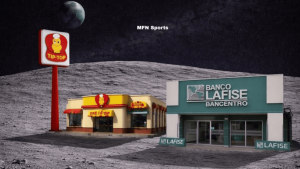
Tip Top is a cultural staple in Nicaragua. When they published images of a functioning restaurant on the moon, it resonated because it played on the brand’s ubiquity.
The message was clear: no matter how far humanity goes, Tip Top will be there to feed them. This kind of “brand loyalty” marketing is incredibly effective for local businesses.
It humanizes the corporation and shows a sense of humor that builds community trust.
In a similar vein, Banco LAFISE used the lunar landscape to project an image of extreme stability. By placing a modern bank branch on the moon, they communicated that their infrastructure and reliability are “out of this world.”
For a financial institution, this is not just a joke; it is a subtle way to demonstrate that they are ready for the future of digital banking and global (or interplanetary) expansion.
Beyond chicken and banking, several other international brands utilized the lunar surface to prove their reliability and reach. Here is how they expanded the “Lunar Neighborhood”:
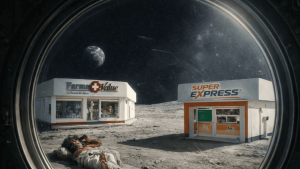
By “opening” a pharmacy among the craters, they sent a message of health and accessibility. The implication was that if they can provide medicine on the moon, they can certainly handle your local needs with ease.
This brand used the trend to highlight convenience. They suggested that no matter where you are in the universe, a quick snack or essential item is only a few lunar steps away.
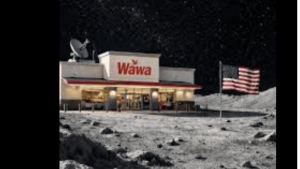
Focused on the “interstellar pit stop” vibe, Wawa positioned itself as the necessary fuel station for space travelers. This reinforced their identity as the ultimate destination for any long journey.
With the iconic beaver logo standing on the moon, they tapped into their cult-following. They suggested that the ultimate “road trip” wouldn’t be complete without a stop at a lunar Buc-ee’s.
They emphasized hospitality. By placing a storefront in orbit, they signaled that their signature “stellar” service is a universal standard that knows no atmospheric bounds.
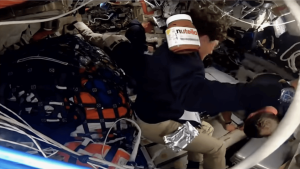
Their strategy was pure joy. By leaning into the viral image of a floating jar, they positioned themselves as the ultimate “comfort food” that follows humanity into the stars.
While the lunar imagery was the catalyst, the true success of these brands came from their sophisticated social media strategies.
In 2026, social media is no longer just a place to post ads; it is a dynamic ecosystem where brands must act as active participants in the global conversation.
The brands that saw the highest ROI during the Artemis II mission were those that engaged with their audience in real-time.
This went beyond simply liking comments and involved a deep level of “conversational marketing.”
This is defined as the brand’s ability to respond to user comments with spontaneous, clever, and contextually relevant humor.
If a user made a joke about ordering a “Lunar Hoagie,” the brand responded with a personalized menu for astronauts. This level of interaction turns a passive viewer into an active participant.
This refers to the use of advanced software tools that monitor social media to determine the emotional “mood” of the audience.
Successful companies used AI to understand the emotional tone of the conversation. This allowed them to respond in a way that felt personal and human, avoiding the “robotic” feel that often plagues corporate social media.
This is the strategic decision to embrace and “remix” internet humor rather than trying to maintain a rigid, traditional corporate image.
Instead of fighting the memes, brands leaned into them. They shared fan-made content of their stores on the moon, which built massive community trust.
In addition to static memes, brands utilized short-form video platforms like Instagram Reels and TikTok to bring their “Lunar Presence” to life.
This is a storytelling technique that gives the audience a “peek behind the curtain” into a fictionalized version of the brand’s operations.
Brands created “interviews” with fictional moon managers or showed “construction” footage of their lunar branches.
This refers to the way social media platforms prioritize video content over images because video drives higher engagement.
Consequently, these videos reached a much wider audience than a standard image post, ensuring the brand’s message stayed at the top of the feed.
This is the use of specific sounds, music, or “sonic logos” to create an immediate mental association with a brand.
Many used trending “space” sounds or futuristic music to create a cohesive sensory experience.
One of the most profound lessons from the Artemis II marketing trend is the deep intersection between social media engagement and search engine optimization.
In the modern digital landscape of 2026, these two elements are inextricably linked in a symbiotic relationship.
In 2026, social media platforms have effectively become the primary search engines for Gen Z and Millennials.
Instead of typing a query into a browser, users search directly into TikTok or Instagram.
In 2026, social algorithms “read” captions to index content. Brands that optimized their social captions with specific, high-intent keywords saw a massive influx of organic traffic.
This “Social SEO” ensures that your content is discoverable by users who are already searching for the topic.
This involves using a mix of broad, high-volume hashtags (like #ArtemisII) and niche ones. This diversity helps the platform’s AI categorize your content correctly.
In 2026, hashtags act as “tags” for Google’s crawlers, helping search engines understand the context of your social media presence.
Many brands temporarily updated their social media bios to include mission-specific keywords. This is critical because bios are often the most highly-indexed part of a social profile.
When a brand’s lunar post goes viral, it sends powerful “social signals” to search engines like Google.
These signals are essentially “votes of confidence” that have a direct impact on your website’s performance and long-term search ranking.
High volumes of shares and mentions tell search algorithms that your brand is a high-authority source. In 2026, Google places high value on E-E-A-T (Experience, Expertise, Authoritativeness, and Trustworthiness).
A viral lunar campaign proves that your brand is a central part of the cultural conversation.
Viral moments almost always lead to press coverage. When a news outlet writes about your “Lunar Branch” story and links back to your site, you gain high-quality backlinks.
In 2026, a single viral social post can generate more high-quality backlinks in 48 hours than a traditional campaign can in six months.
By linking social posts directly to deep-dive blog content, brands keep users on their sites longer. This is known as “Dwell Time.”
When a user spends more time on your site, it signals to search engines that your website deserves to be at the top of the search engine results pages (SERPs).
Navigating the complexities of global trends and the ever-changing digital landscape requires a partner with vision and technical expertise.
Expresso Company is dedicated to helping international brands take their marketing to the next level.
We don’t just provide marketing; we provide the strategic framework your business needs to thrive in 2026. Here is how we can help:
The return of the Artemis II crew marks the beginning of a new era. The Artemis II Marketing Trend taught us that the boundaries between “local” and “global” have effectively dissolved. A brand in Nicaragua can participate in a conversation about a NASA mission just as effectively as a brand in Florida.
Ultimately, the lesson for business owners in 2026 is that authenticity is the currency of the future. The moon is no longer a distant rock; it is a canvas for our collective imagination. As we look toward the future, the brands that continue to play with these global narratives will be the ones that win the hearts of the next generation of consumers.
The mission represented the first time in fifty years that humans were in the vicinity of the moon. This created a global “event-based” audience that was looking for a shared narrative. For marketers, this is a goldmine because it allows for “Trend-Jacking”—the process of aligning your brand with a high-volume news event to gain massive organic visibility. In 2026, where digital saturation is at an all-time high, these “moments of unity” are rare and incredibly valuable for breaking through the noise.
Absolutely not. We are now in the “Reflection and Legacy” phase of the marketing cycle. People are currently searching for “Artemis II results” and “What’s next after Artemis II.” This is the perfect time to publish deep-dive content, “best of” compilations, or to announce your own “future-focused” business goals. In SEO terms, the “Long Tail” of this trend will last for several years, providing a consistent stream of traffic for those who keep their content updated.
The key is consistency. If your brand is traditionally serious (like a bank), your humor should be clever and subtle—like the “confirmation” of a lunar branch to show stability. If your brand is more casual (like a fast-food chain), you can be more “meme-heavy.” The goal is not to change your personality, but to show that your personality can adapt to different contexts. Expresso Company helps brands find this balance, ensuring that their “Space Marketing” feels like a natural extension of their existing identity.
Social SEO is the practice of optimizing your social media profiles and content to be discoverable within the platforms’ own search engines. In 2026, millions of people will use Instagram and TikTok search as their primary way to find products and news. By using keywords like “Artemis II Marketing Trend” in your captions and alt-text, you are making it easier for new customers to find you organically, without you having to pay for ads. This is one of the most cost-effective ways to grow your brand in the modern digital landscape.
ROI can be measured through three main pillars: Engagement, Traffic, and Authority.
By tracking these metrics through Google Analytics and Social Media Insights, you can see exactly how much “value” your trend-jacking has created for your business. Expresso Company provides detailed reporting on all of these factors so you can see your growth in real-time.

